NotebookLM vs ChatGPT PDF Study Evidence Pack
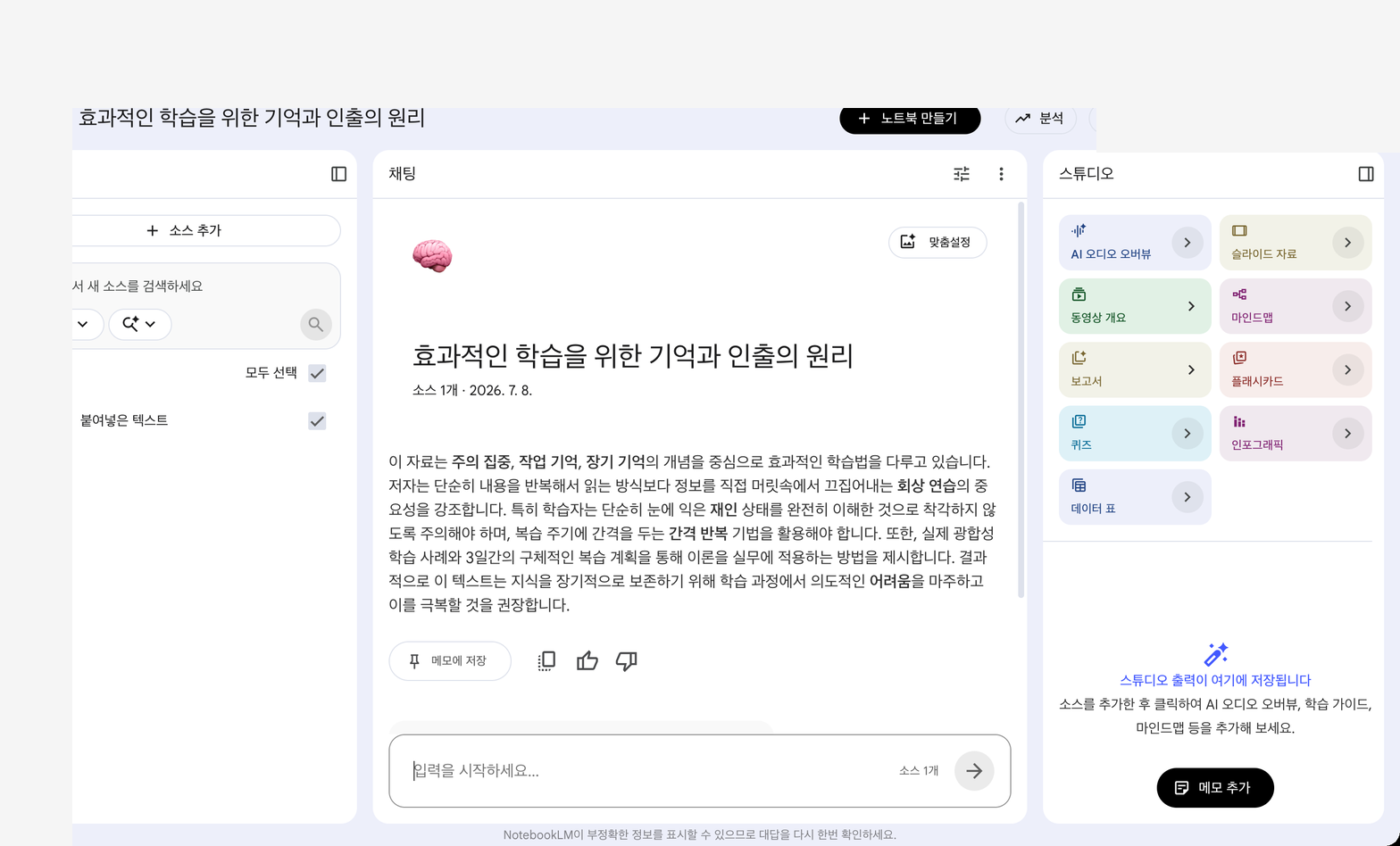
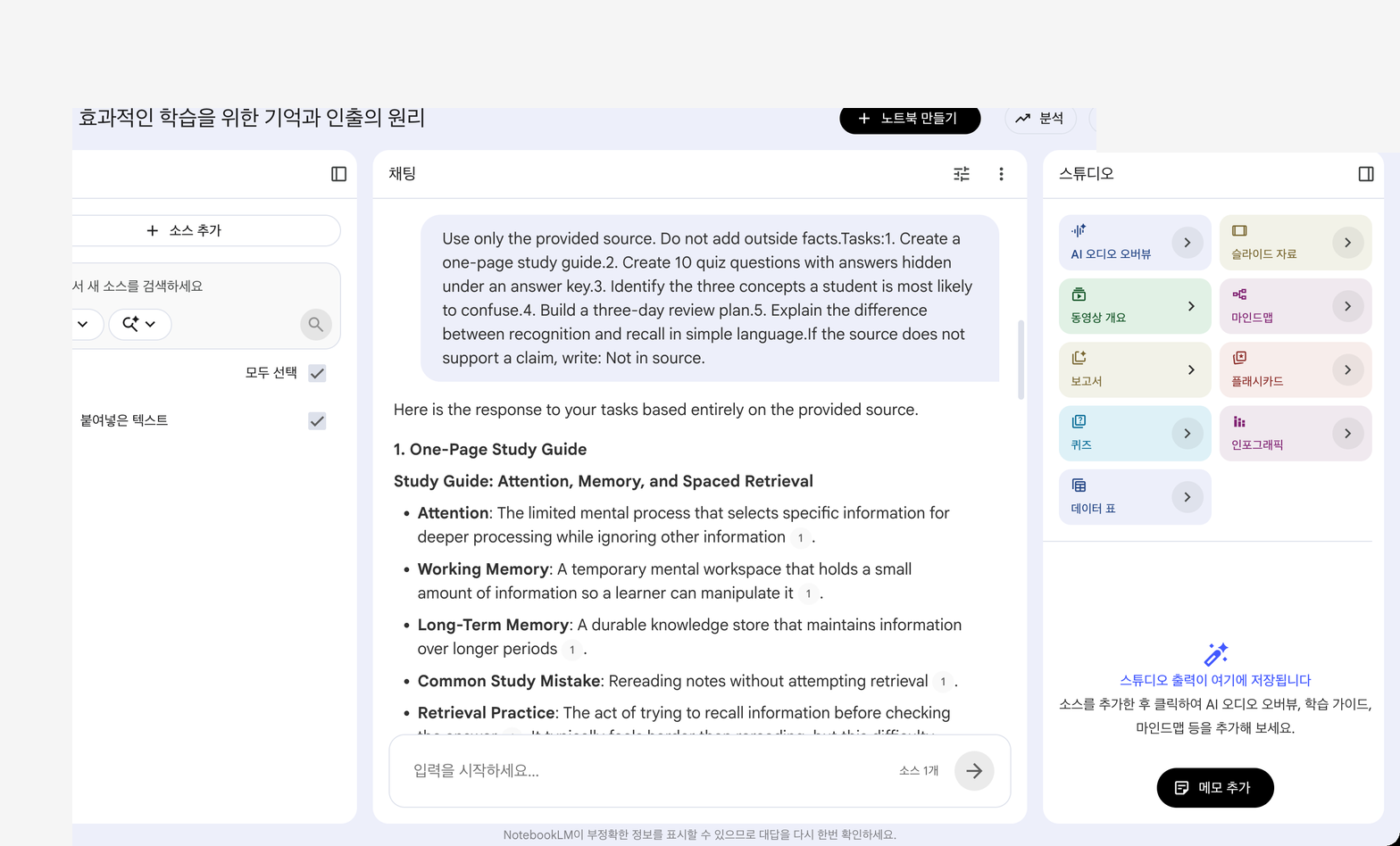
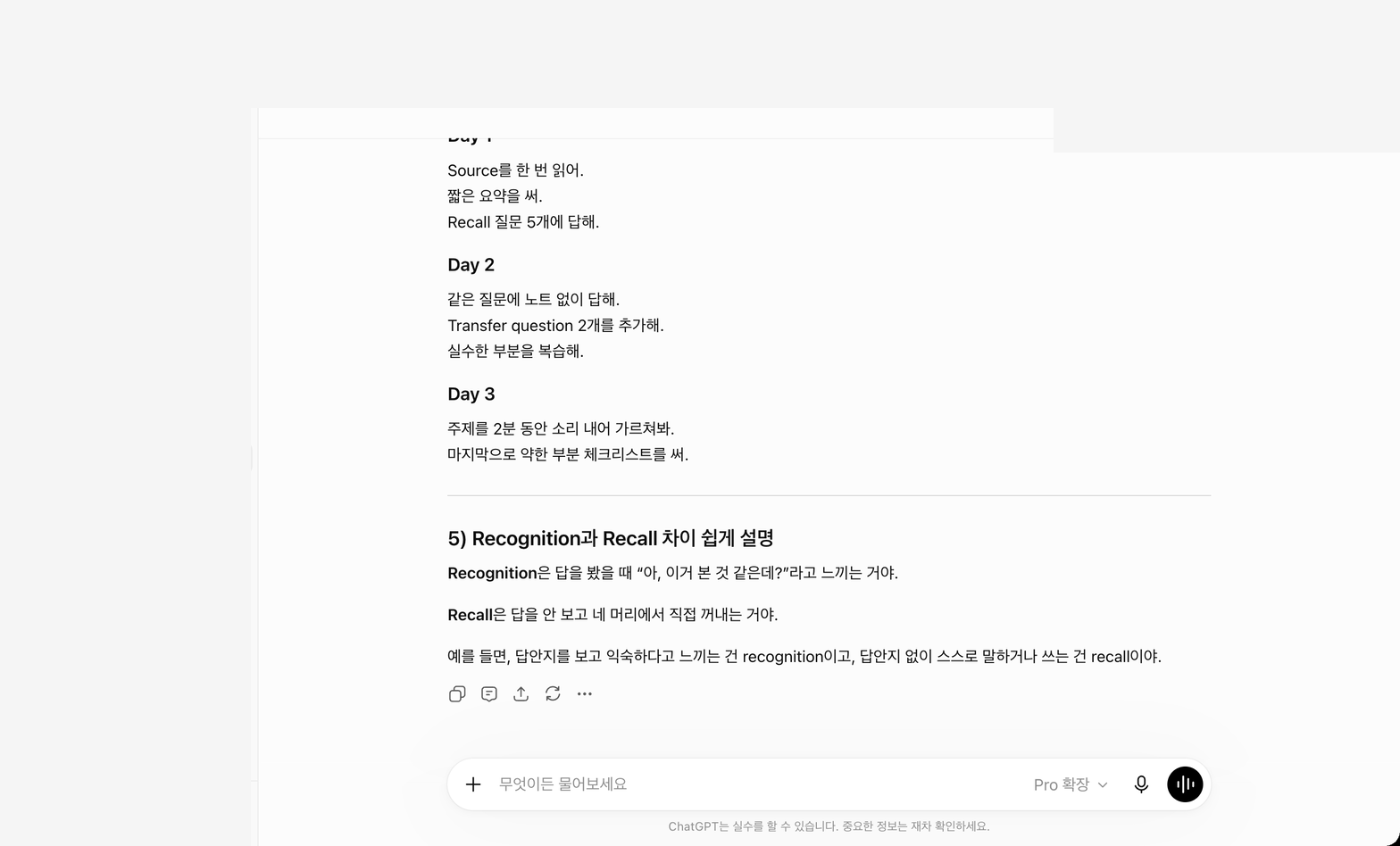
This page shows the evidence behind the three public PDF study workflow guides. It is intentionally small: one synthetic study handout, one shared prompt, one NotebookLM run, one ChatGPT run, screenshots, outputs, scoring sheet, and limitation notes.
Tested with
| Field | Value |
|---|---|
| Test source | One synthetic study handout about attention, working memory, long-term memory, retrieval practice, spacing, recognition, recall, and a three-day review plan |
| Prompt | Same-source study prompt |
| NotebookLM run | One captured run |
| ChatGPT run | One captured run |
| Last checked | 2026-07-09 |
| Claim type | Practical workflow test, not a broad benchmark |
What this evidence supports
The evidence supports a narrow workflow recommendation:
- Use NotebookLM first when the job is source-grounded extraction and source checking.
- Use ChatGPT second when the job is explanation, quiz generation, answer-key formatting, and review planning.
- Verify high-stakes claims against the original PDF/source before trusting them.
It does not prove that either tool is always more accurate, better for every PDF, or sufficient for graded/cited work without checking.
Screenshots
Raw files
| File | Link |
|---|---|
| Source handout Markdown | same-source-study-notes.md |
| Source handout PDF | same-source-study-notes.pdf |
| Shared prompt | same-source-prompt.txt |
| NotebookLM output | notebooklm-output.md |
| ChatGPT output | chatgpt-output.md |
| Evaluation rubric | evaluation-rubric.md |
| Scoring sheet | scoring-sheet.csv |
| Unsupported claims log | unsupported-claims-log.md |
| Source claim map | source-claim-map.md |
| Evidence manifest | evidence-manifest.md |